Vegetative
reproduction in Funaria (Moss) :
In this
method new plants are produced from vegetative part of the plant.
It take
place by following methods:

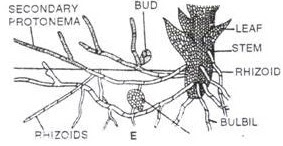
1. Primary protonema : The
multicellular branched filamantous structure which bears
buds are calledas primary protonema. The protonema formed by
germination of spores is callled as
primary protonema. The branches containg buds if seperate
due disintegration of incalary cell
or by orther mean, each bud develop into new plant.

2. Seconday protonema : It
is developed from any vegetative part of plant body other
than spore. Seonday protonema is similar to primary
protonema in structure and
function . Their individual buds give rise to new plant.
3. Gemma : Gemma are the
small multicellular structure developed from terminal cell
of protonema.If they get detached from parent body by any
means, each gemma give rise
to new plant.
4. Tubers : Tubers are
similar to gemma in function and structure excpet they develop from
rhizoid under unfavourable condition. When they get detached
from the rhizoid,
each of them give rise to new plant under favourable
condition.
5. Apospory
: Apospory is the phenomenon of development of new plant directly from
wounded part of sporophyte whiout the occurance of meiosis
cell division. The plant which


